Advantages of Polyvinylidene Fluoride (PVDF) Materials
1. **Excellent Chemical Resistance**
**Resistance to Strong Acids and Bases:** Capable of withstanding highly corrosive media over extended periods. Suitable for equipment in high-risk environments—such as chemical plants and electroplating facilities—as well as for weather-resistant piping and ductwork. It can also be utilized for protective coverings and lighting fixtures within wastewater treatment plants.
**Case Study:** An electroplating plant replaced its stainless steel piping with PVDF piping, extending the service life from 2 years to 10 years and reducing maintenance costs by 70%. It is also suitable for use as protective cladding for ventilation duct systems.
2. **Excellent Weather Resistance**
**UV Resistance:** Even after 15 years of outdoor exposure, the material retains >90% of its original tensile strength. Ideal for architectural curtain walls, photovoltaic backsheets, and roofing membranes in environments such as factories and warehouses, particularly in harsh high-altitude or desert climates.
3. **Excellent Mechanical Properties**
**High Strength:** Possesses a tensile strength of 50–60 MPa—several times that of PVC—enabling it to withstand high pressures and heavy loads.
4. **Excellent Electrical Insulation Properties**
**High Dielectric Strength:** ≥40 kV/mm. Suitable for use as insulation layers in high-voltage cables; offers water resistance, flame retardancy, and high-temperature stability.
5. **Processability and Customizability**
**Versatile Processing Methods:** Supports various manufacturing processes—including injection molding, blow molding, and casting—enabling the fabrication of complex structural components.
**Application Scenarios and Recommendations**
| **Scenario** | **Reasons for Recommendation** | **Limitations to Consider** |
|———————————-|————————————————————–|———————————————————–|
| **Chemical Piping & Storage Tanks** | Resistant to strong acids and bases; long service life. | Requires thermal insulation in low-temperature environments. |
| **Architectural Curtain Walls** | Excellent weather resistance; strong self-cleaning capabilities. | High cost; requires a thorough ROI assessment. |
| **Seawater Desalination Membranes**| Resistant to chlorine corrosion; high capacitance. | Requires periodic cleaning to prevent biofouling. |
In modern architectural design, the selection and innovation of materials are of paramount importance. Materials serve not only to construct a building’s fundamental framework but also to embody the architect’s pursuit of functionality, aesthetics, sustainability, and durability.
This article explores the application of PVDF canopy membrane structures in architectural design, as well as the innovations and impacts they introduce.
1. Characteristics of Polyvinylidene Fluoride (PVDF) Membrane Structures
Polyvinylidene Fluoride (PVDF) is a polymeric material characterized by its exceptional chemical stability and weather resistance. Its key properties include:
Weather Resistance: PVDF membrane materials possess superior weather resistance, enabling them to withstand the combined effects of natural environmental factors—such as high temperatures, wind, and rain—while maintaining stable performance over the long term. They demonstrate excellent durability in outdoor settings.
Light Transmittance: PVDF membrane materials allow for a certain degree of light transmission without compromising their structural integrity. This keeps interior spaces bright during the day, thereby reducing the need for artificial lighting; furthermore, at night, the material reflects interior light outward, enhancing the overall luminosity of the building.
Lightweight Nature: Compared to traditional building materials such as glass and metal, PVDF membrane materials are significantly lighter, offering distinct advantages when designing large-span structures. This not only reduces the building’s dead load but also lowers the associated costs for steel and concrete structural components.
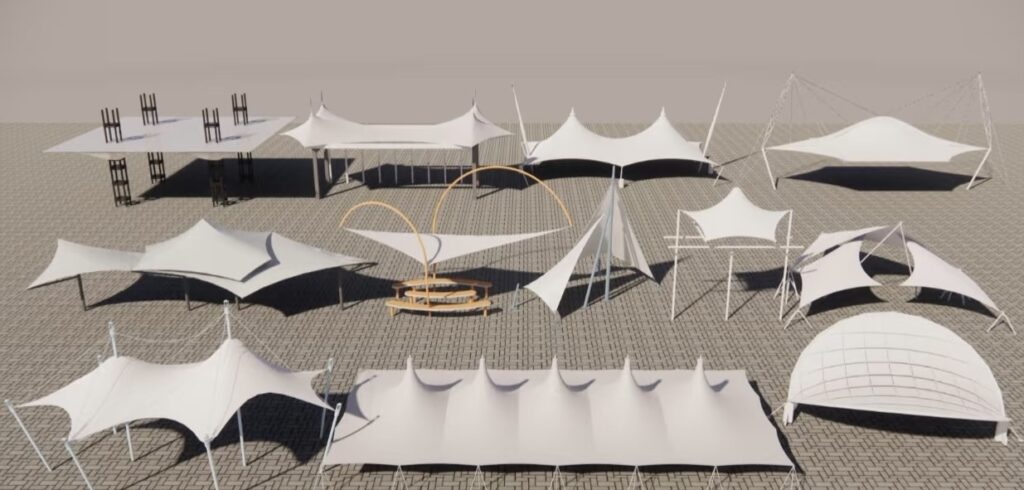
Flexibility: PVDF membrane materials can be freely bent and shaped to meet specific design requirements. Consequently, membrane structures offer a high degree of customization capability. This allows for a wide variety of projects and enables clients to tailor the aesthetic design to their personal preferences, thereby realizing more diverse and innovative architectural concepts (a feature particularly well-suited for urban landscape membrane structures).
2. Applications of Polyvinylidene Fluoride (PVDF) Canopy Membrane Structures in Architectural Design
Sports Stadiums and Exhibition Centers: PVDF membrane structures are frequently utilized in the roof designs of sports stadiums and exhibition centers. Their lightweight nature and large-span capabilities allow them to cover vast areas with minimal internal structural support, thereby providing an optimal indoor environment for sporting events and major exhibitions.
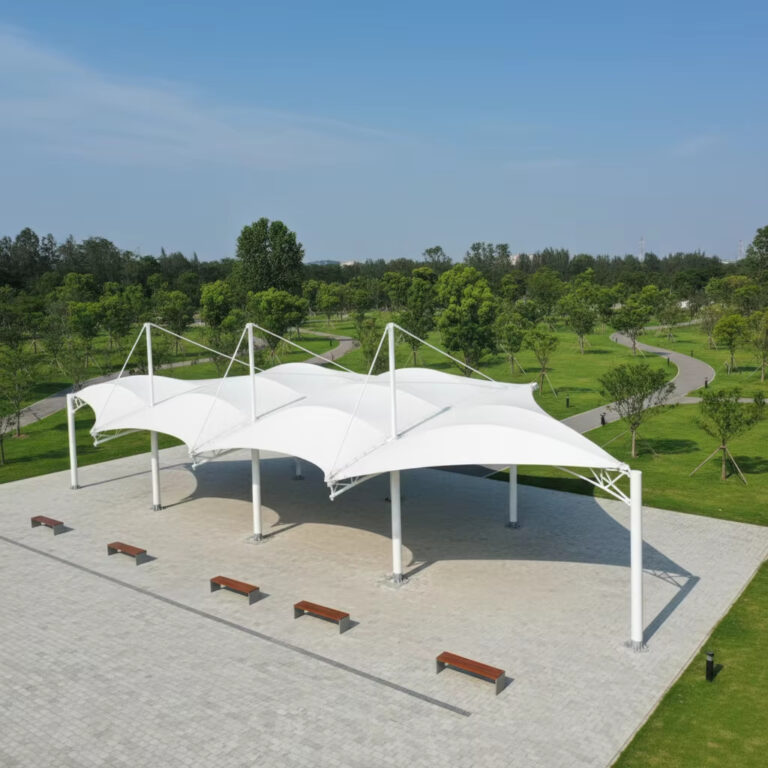
Commercial Centers and Shopping Malls: In the design of commercial centers and shopping malls, PVDF membrane structures are often incorporated as decorative roofing elements or shading structures. Their light-transmitting properties create a bright and comfortable indoor atmosphere, while their unique architectural forms serve as eye-catching aesthetic features that attract customers and help reduce reliance on artificial interior lighting. Landscape Architecture: PVDF membrane structures are lightweight and highly malleable, making them widely recognized in the field of landscape architecture—for instance, as canopies for pedestrian streets and outdoor structures in public squares. These structures not only provide comfortable spaces for rest and sightseeing but also become integral elements of the urban landscape, adding both aesthetic appeal and vitality to the city.
Transportation Hubs: In the design of transportation hubs—such as railway stations and airports—PVDF membrane structures are frequently utilized for canopies over station platforms and waiting areas. Their lightweight nature effectively reduces the cost of supporting structures while simultaneously creating a comfortable waiting environment for travelers.