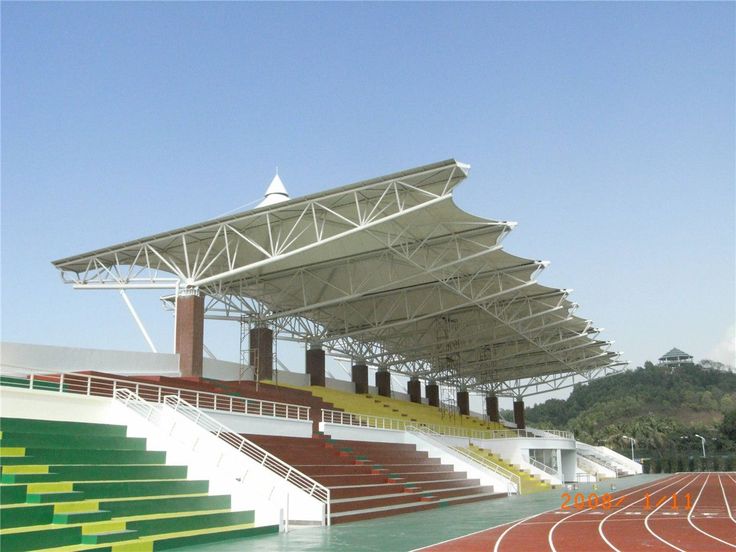
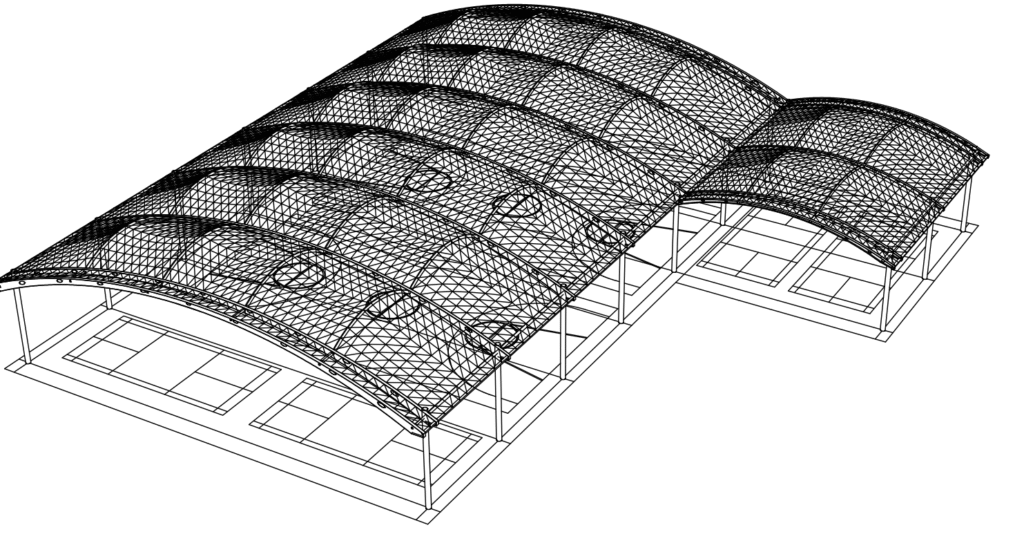
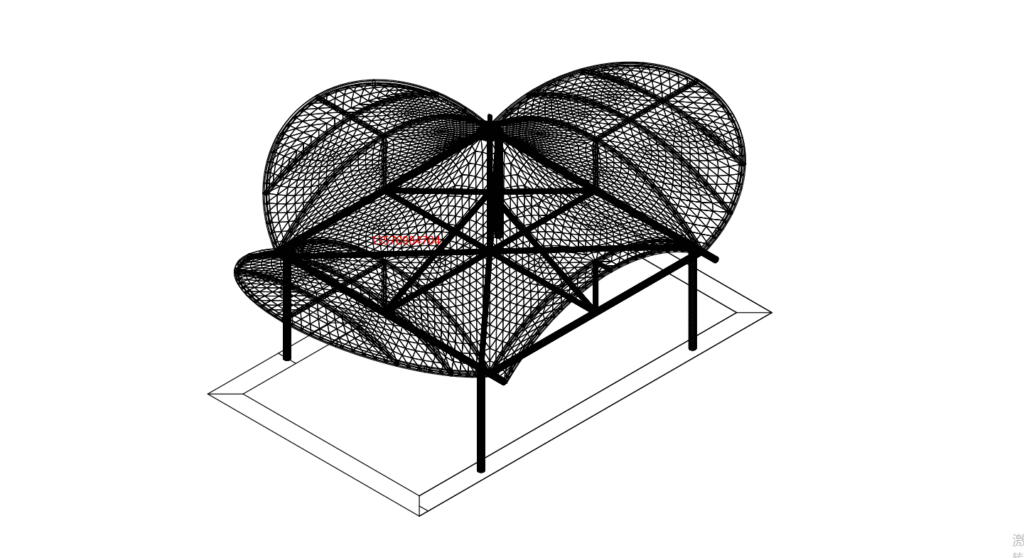
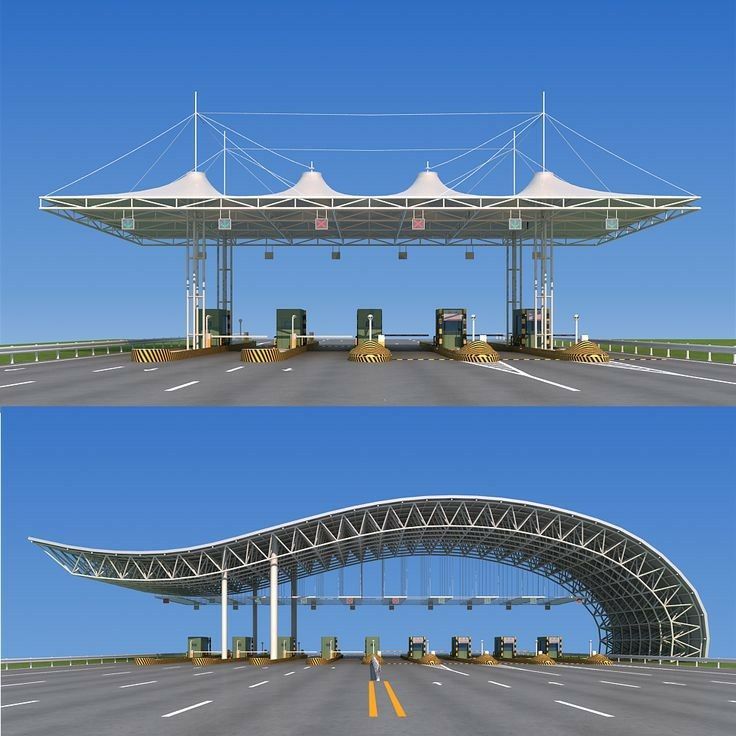
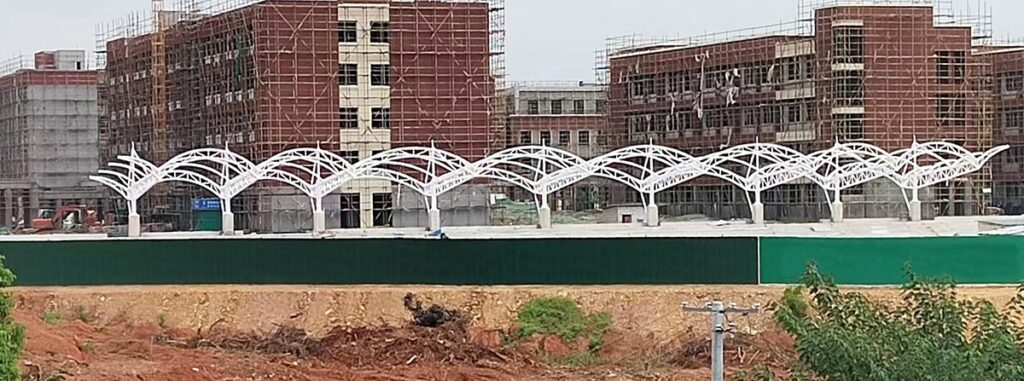
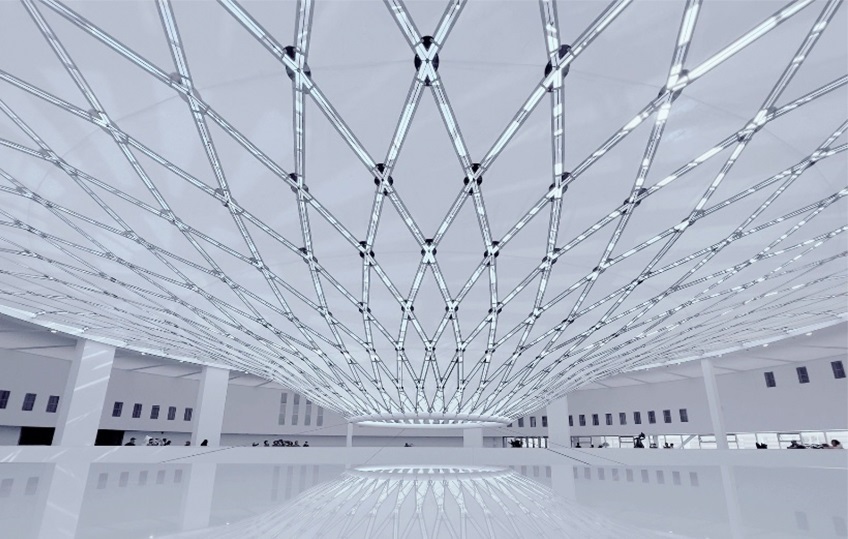
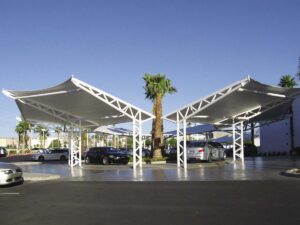
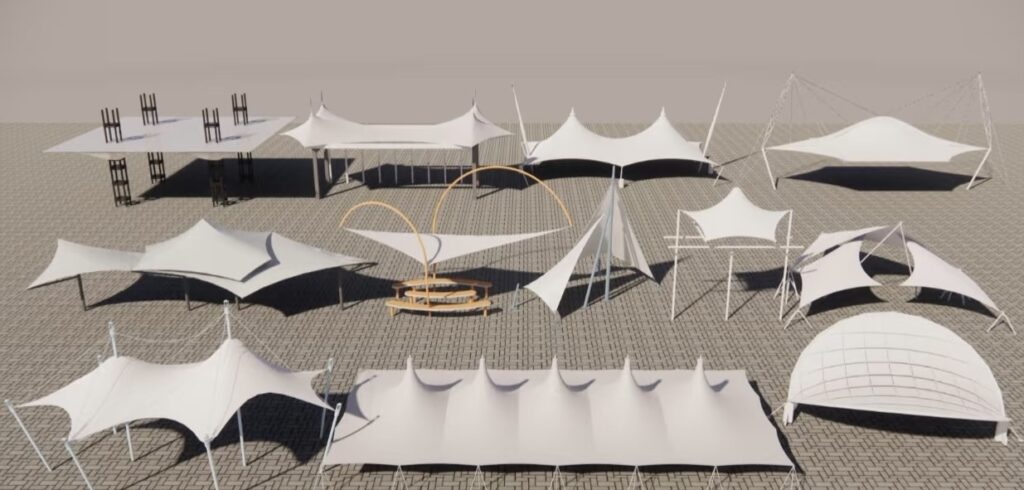
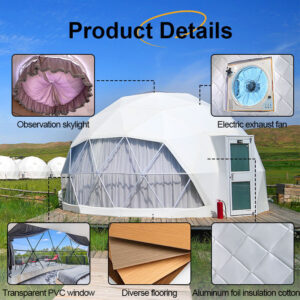
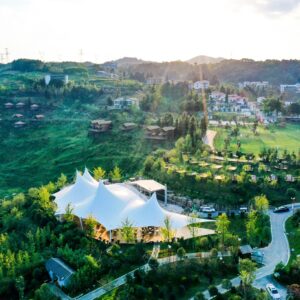
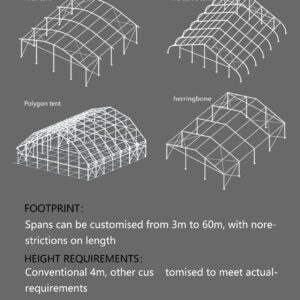
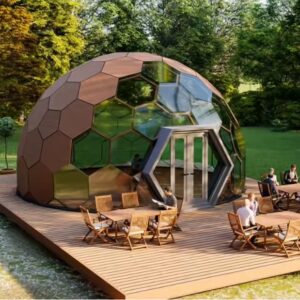
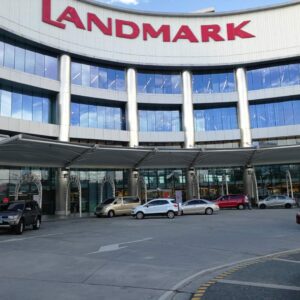
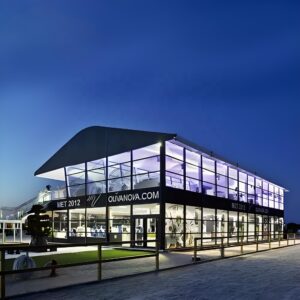
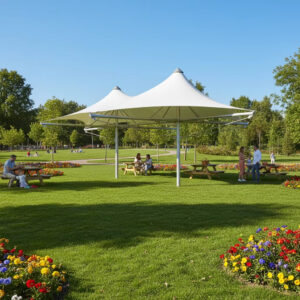
Membrane structure is an architectural form that utilizes high-strength, flexible membrane materials as its primary structural components; through methods such as tensioning and support, and by employing nodal plate fittings, it creates a stable spatial configuration. Its core characteristics lie in its lightweight nature, high light transmittance, and excellent structural plasticity. Membrane structures are capable of meeting the requirements for large-span spaces and, through creative formal design, embody the aesthetics of modern architecture (examples include large-scale membrane-structure stadiums, school grandstands, tennis courts, and basketball courts; as well as outdoor landscape structures, such as elevated walkways, park shade canopies, and hotel awnings). Within sports venues, membrane-structure grandstands—distinguished by their unique mechanical properties and adaptability—have gradually emerged as one of the leading choices for canopy materials.
I. Technical Principles and Core Components
Membrane structure grandstands mainly consist of three parts: membrane material, supporting structure, and connectors. The membrane material is usually made of polyester fiber or glass fiber base fabric, coated with PVDF or PTFE, which has UV resistance, corrosion resistance, and self-cleaning functions.
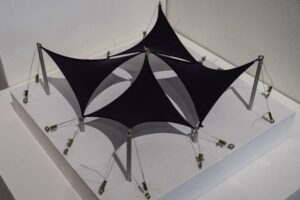
The main supporting structure utilizes steel cables or steel frames, employing tensioning technology to create a pre-stressed state within the membrane material, thus ensuring overall stability. Connectors are secured with bolts, guaranteeing both structural strength and ease of future maintenance. The photos clearly show the cable used to fix the structure.
Based on the design drawing requirements for your project, please contact us if you require a complimentary design proposal.
Its design concept leverages the synergistic effects of flexible membrane materials and rigid supports to mitigate wind loads. External forces—such as wind (at speeds of 120 km/h) and snow loads—are distributed across the entire structural system, thereby achieving both lightweight construction and high structural stability.
II. Applicable Scenarios and Functional Advantages: Membrane structures are widely utilized in large-scale venues such as football fields, basketball courts, and gymnasiums, and are particularly well-suited for spaces requiring large spans and column-free interiors. Their advantages are manifested in the following three aspects:
First, strong wind resistance, capable of withstanding winds of 8-12 levels, with wind-induced vibration effects reduced through morphological optimization;
Second, high durability, with coating technology extending the membrane material’s lifespan to over 20 years, and low maintenance costs, requiring only periodic inspections;
Third, flexible design, allowing for customized sizes and shapes according to venue requirements, with a design cycle typically of 7-15 days, enabling rapid response to different needs. Project Requirements.
Furthermore, the light transmittance of the membrane material reduces daytime lighting energy consumption, meeting green building standards.
III. Safety Standards and Long-Term Maintenance
Membrane structure grandstands must strictly adhere to national building codes and standards. From material selection to construction techniques, every stage of the process is certified under the ISO 9001 Quality Management System to ensure structural integrity and safety.
The connection method utilizes bolted fastenings, thereby avoiding potential issues of stress concentration often associated with welding. Furthermore, the load-bearing capacity can be customized to meet the specific spectator capacity requirements of different venues.
Regarding maintenance, our comprehensive lifetime after-sales service system covers the entire lifecycle of the structure, including periodic structural inspections and the replacement of membrane materials. Regular inspections facilitate the timely detection of potential issues, thereby extending the overall service life of the structure.
Compared to traditional roofing materials—such as sheet metal sheds or corrugated steel roofs—
membrane structures offer lower maintenance costs and greater adaptability, making them an economical and highly efficient choice for sports venue construction.
Please feel free to contact us for inquiries. WhatsApp: 008613570984704

Products
-
Aluminum alloy tent
Rated 0 out of 5 -
swimming pool membrane structure
Rated 0 out of 5 -
amusement park swimming pool membrane structure
Rated 0 out of 5 -
Rosort pvc dome tent hotel resort house
Rated 0 out of 5 -
Luxury Safari Twin Peaks Resort Hotel Exhibition Tent
Rated 0 out of 5 -
Safari tent for hotel resort glamping ,
Rated 0 out of 5